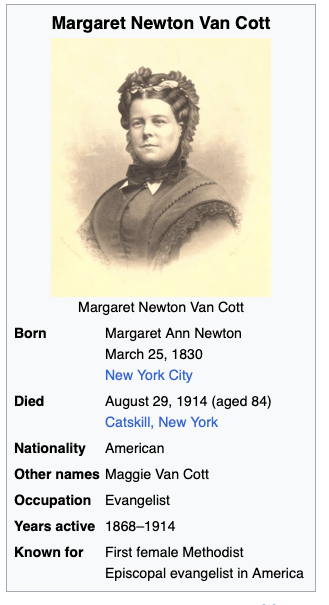
Maggie Van Cott (Margaret Newton Van Cott): early woman preacher & evangelist.

Maggie van Cott (1830-1914), seen here in a screen shot of her biography on Wikipedia.com, was the first woman in Troy Conference to be given a license to preach, and became famous throughout the North East as a leader of revivals, and even made tours out West. She received her license to preach in 1869, which was obviously controversial, and yet also very popular. In the book “The Harvest and the Reaper” written from her recollections,  there are contemporary reviews of her preaching, and whilst some criticize her lack of training as an orator and theologian, (and talk about her “womanly logic” – meaning lack of it,)  they all have to admit to her success at her goal of “bringing souls to Christ.”

 In March and April,1876, Maggie van Cott visited the State Street, Troy, NY congregation, staying with the Hillman family. Both Maggie and the Troy Praying Band, under Hillman,  had visited the Springfield, MA Methodists in the past to run revivals. 

The Troy Daily Times reports the revival events, reporting that the church was full for some, and that the one – weekday – afternoon, when they reported a smaller crowd, it still numbered several hundred. The pastor’s wife, Mrs. Kimball, and Mrs Joseph Hillman held some women only events, in addition to those open to the general public.

Joseph Hillman records in his book, Methodism in Troy, both his home and that of the pastor, Rev. H.D.Kimball, were robbed during the revival at the church: “the writer took the most complacent view of the loss as was possible, and proposed that the hymn “Hallelujah, ‘tis done” should be sung.” (Hillman, p.73.) He then continues to speak of the revival being a “glorious success” and how it also gave the Presbyterian church some new members.* Several of the revivals, at State Street Methodist Episcopal do appear to have been led with some support from the local Baptists congregations.

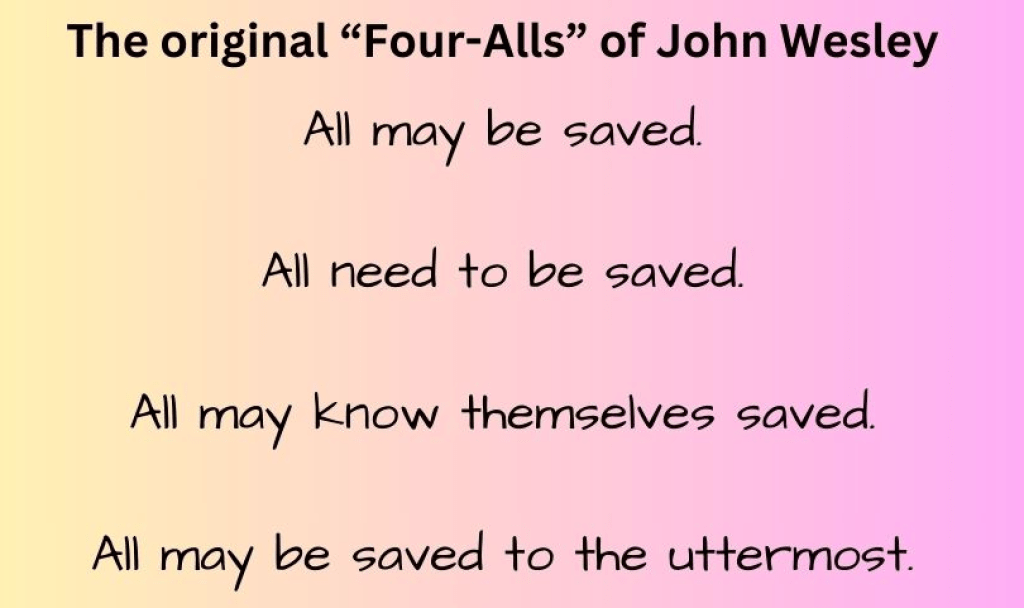
Revivals were not always seen positively in the Presbyterian denomination, as can be read at the link below, so it is interesting that the friendly relationships between denominations, praised more than half a century earlier by Frederick Garresttson when visiting Troy, seems to have continued to some extent.  The objections by the Presbyterian denomination included the inordinate “enthusiasm” which so often was a criticism of Methodist worship, but also the preaching. The nature of revival preaching made it less likely to be on the theology of Calvin. Revivalists were often Methodists, and their founder, John Wesley, had written many treatises in direct opposition to Calvinism, contrasting it with his own theology of the Four Alls, a traditional summary of Methodism teaching which underpins British Methodism to this day: 
She was born in New York City, but it is widely reported that, on the death of her husband,  moved to Greene County, which she deemed a better base for her revival work, and died at Catskill. A Maggie Van Cott does appear on the list of city residents in the 1830s, which hints that maybe she moved first to Troy and, as her travels and fame grew, moved  to Greene County. 

 By her 50th birthday she had supposedly traveled 143,417 miles, held 9,933 revival meetings, and given 4,294 sermons, but the total was far greater as continued her work until her eighties.

The New York Annual Conference of the Methodist Church created a bulletin insert for Women’s History Month in 2016, and it can be accessed at their site.

Online copy of her book: The Harvest and the Reaper can be read online, free of charge, at Google.com/books

Online copy of The Life and Labors of Mrs. Maggie Van Cott by John Onesimus Foster can be read free of charge, online, at Google.com/books

For more information on the Four Alls, one resource is the “What is Distinctive about methodism” page of the British Methodist Church.please visit the Methodist Church site at methodist.org.uk

The image at the top of the page comes from Wikipedia.com and is the title of their boigraphical sketch of the Mrs. Van Cott. The image of the “Four Alls” was created by the author.
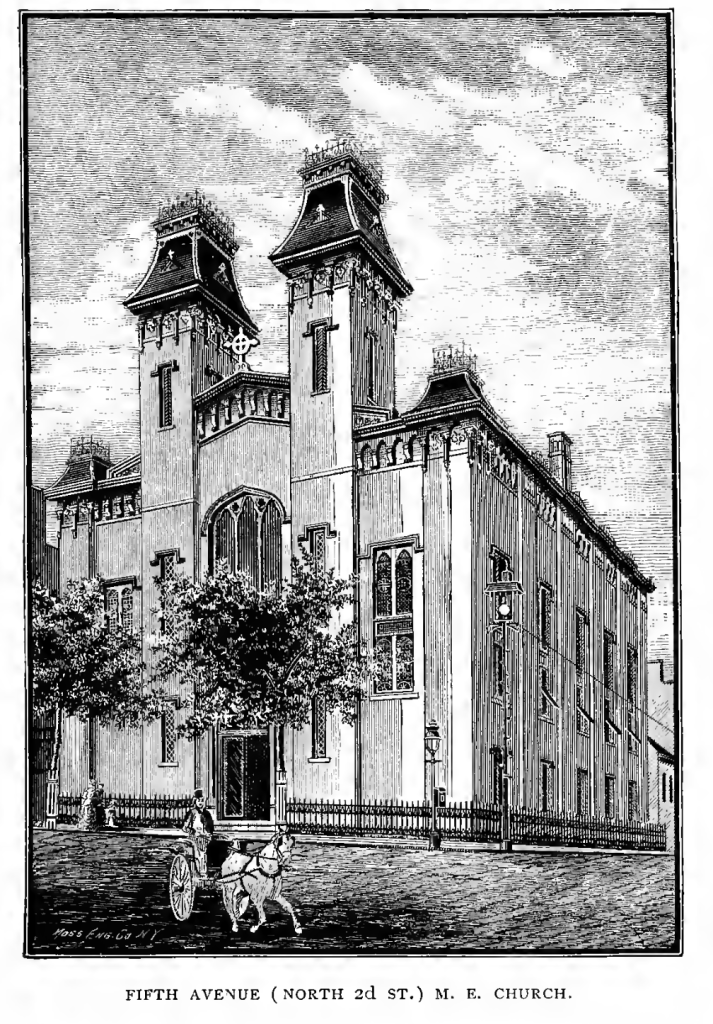
The Methodist Episcopal Churches of Troy, NY: Fifth Avenue/ North Second Street

Extended notes on the Methodist congregations associated with the State Street Methodist Episcopal Church (now Christ Church, United Methodist.)

“The expediency of taking advantage of the growth of the city northward of Grand Division Street, and of having a church in which the seats were free, caused the State Street society to give consideration to the project of providing a place of worship in the north part of Troy. On May 23, 1831, the Quarterly Conference appointed a committee ‘to provide a place for preaching somewhere in the bounds of the fourth ward.’ On August 8, that year, the committee reported ‘that the only place to be had ‘ was ‘the dwelling-house’ of Stephen Monroe. A committee of five persons was then appointed ‘to provide a place or places for meetings in the first and fourth wards of the city (…) Considering that the lot on the northeast corner of North Second and Jacob streets would be an eligible site for a church.” (Hillman, pp 87-8)

On the evening August 13, 1831, the trustees of the State Street society “resolved that a subscription should be circulated throughout the City of Troy and elsewhere for the purpose of building a Methodist Episcopal Church in the fourth ward of the city ‘with free seats.” showing that the idea of having paid seating in the “mother church” on State Street had become an issue for some of the congregation.

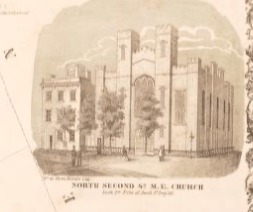
This building was a brick structure and included a basement. As soon as it was built the Sunday School which had been organized nearby, in the school-room of Miss Annie Manwarring, was moved there and prayer meetings began. “On Sunday afternoon, August 30, 1835, Bishop Elijah Hedding dedicated the church.“ (Hillman 87-88.) The congregation having grown in number, this church building was replaced with a grander structure, which was originally slightly less grand than the drawing found in Hillman’s book. The original aspect of the church can be seen in this 1869 map by William Barton which can be seen online at the New York Public Library website. The private house next door in that drawing, appears have become the parsonage.

The congregation chose to re-merge with the State Street congregation in the 1920’s, at the same time as the German Episcopal Methodist church. The merger of these three churches occurred in 1925, and is recalled by an unknown member of State Street Methodist Episcopal, upon the 125th anniversary of the church in 1939:“Time passed on with greater or less success to Methodism in Troy, until the year 1925 when the mother church grew lonesome for her children and it was decided to unite the congregations of State Street, Fifth Avenue and the German Church under one head whose name should be the Fifth Avenue-State Street Methodist Episcopal Church.”

(quoted by Rev. Dr. James Fenimore in his 1998 paper: “Christ Church, United Methodist – a Church on the Edge of an Apocalypse” from a letter to the church entitled “To the Pastor and People of State St. Methodist Episcopal Church.” This paper is available online.)

The building and its parsonage became the property of St. Peter’s Armenian Apostolic Church in 1927. That congregation left the building when they constructed their new church in Watervliet, in 1971. An African American congregation then worshiped in the church, until it became suddenly and dangerously unstable, and was razed by the City of Troy in the 1999. The parsonage was demolished a little later.

In 2024, the lot which was occupied by the church and parsonage, is used for parking. It is located between Federal and Jacob Streets on Fifth Avenue, in the area now known as Columbus Square.

Line drawings and quotations are from “The History of Methodism in Troy” by Joseph Hillman, 1888, available as a PDF, free of charge, at a number of online archives, including the Library of Congress. Photographs are the author’s.

The Methodist Episcopal Churches of Troy, NY: East Side Church/ Pawling Avenue.

Extended notes on the Methodist congregations associated with the State Street Methodist Episcopal Church (now Christ Church, United Methodist.)

Pawling Avenue/ East Side Methodist Episcopal Church

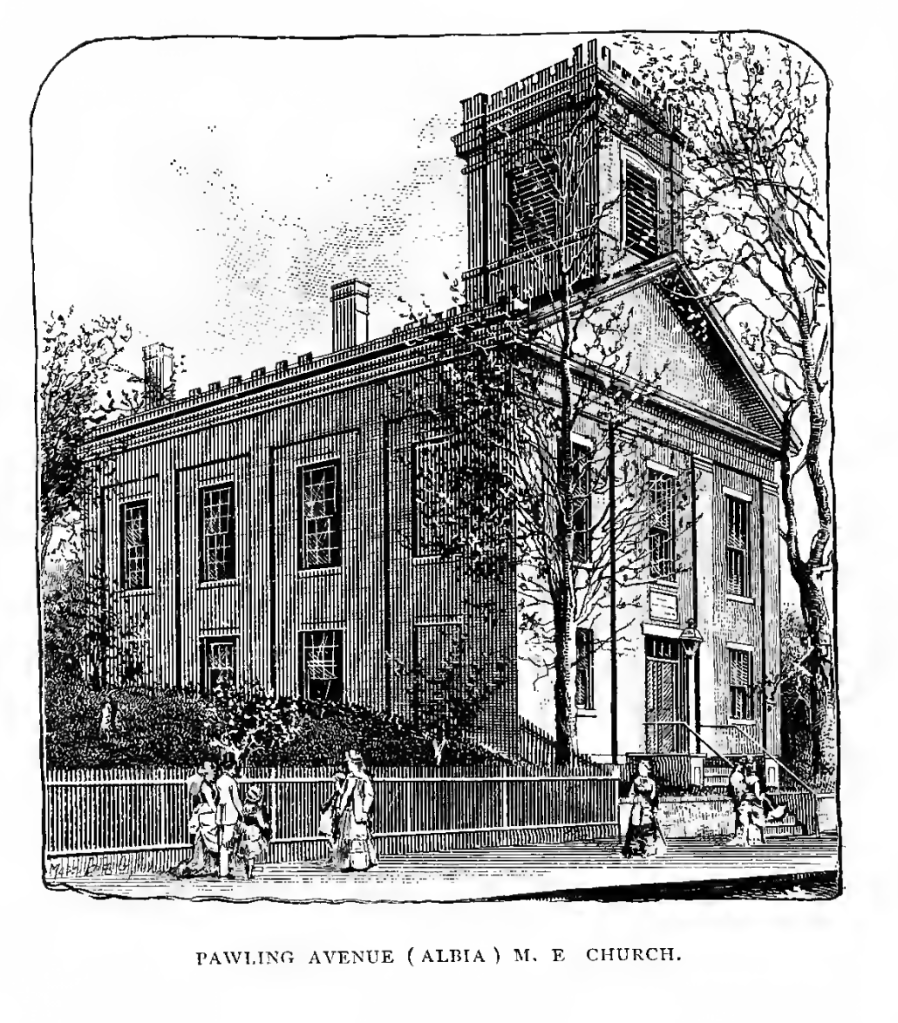
“The first Methodist meeting house at Albia, in the fifth ward of the city, was erected by the trustees of the State street society, for the purpose of providing its members with a convenient place for hearing preaching and for holding prayer -meetings, when they were precluded from attending religious services at the State Street Church.“ The trustees of State Street formed a committee to build a meeting house in Albia, on August 15, 1826. The first reported sermon was preached there in 1829 (Hillman. p 83.)

This Methodist “society” – congregation- was not only the the first satellite church of the State Street church, but of all of those churches, is the only one still in operation today, in a building within sight of the location of the original one. It was needed because the mill workers would have had a xxx mile work to downtown Troy, and then walking back up a steep valley side, not only taking a lot of time and effort, but on unpaved roadways and in all weather, it must have been a dangerous and difficult journey. It is remarkable that up to this point some actually had made it!

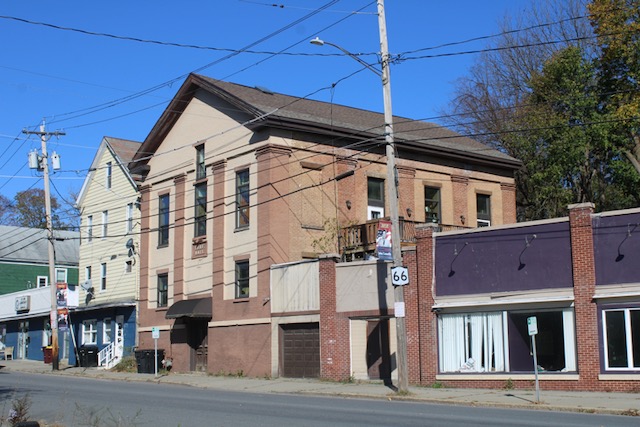
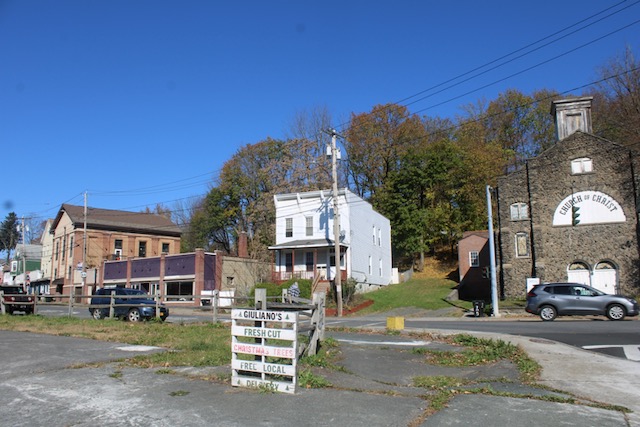
The original building was made of wood, and Hillman reported that the stone tablet above the door read that the church was erected in 1827, and rebuilt in 1858. Maps show it as being a little smaller than the still-standing original Presbyterian Church, now labeled as a Church of Christ, though not in use, just a hundred yards away at the junction of Pawling Avenue and Winter Street. The site of the East Side Methodist Church became home to the Oddfellows Society, and the structure still visible at the site does have the appearance of a chapel, but one made of brick, not wood. It now appears to be a home.

The site of the original East Side Methodist Episcopal Church on the east side of Pawling Avenue.

The view from the junction of Pauling Avenue and Winter Street, with the Wynantskill immediately behind the photographer. These banks were lined with mill buildings, and some remains are visible looking over the bridge as well as on adjacent properties.

The congregation adopted the official name of the “Pawling Avenue Methodist Episcopal Church” in 1868, and in 1888 Hillman reported a membership of 166 persons.

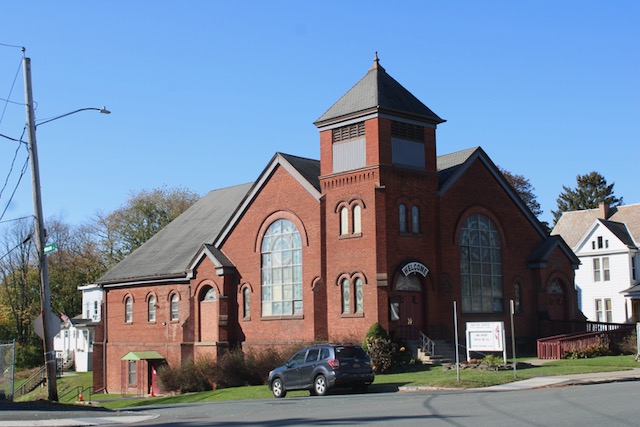
A few years after the publication of Hillman’s book, the current brick church, known locally as “The Welcome Church,” was constructed on the western side of the road, less than half a mile to the north. This congregation continues to welcome neighbors and friend to worship and community meals, and can be contacted on Facebook and the web. If your genealogical search leads you to this congregation, you should start by asking what records they have, as operational UMC churches usually hold their records.

Many of the imposing brick structures of the mills, including those first erected by Mahlon Taylor not long after his arrival in Troy in 1789, and their successors, were still standing beside the Wynantskill into the 21st Century.

Line drawings and quotations are from “The History of Methodism in Troy” by Joseph Hillman, 1888, available as a PDF, free of charge, at a number of online archives, including the Library of Congress. Photographs are the author’s.