Extended notes on State Street Methodist Episcopal Church (now Christ Church United Methodist) and the buildings and congregations that came from it.
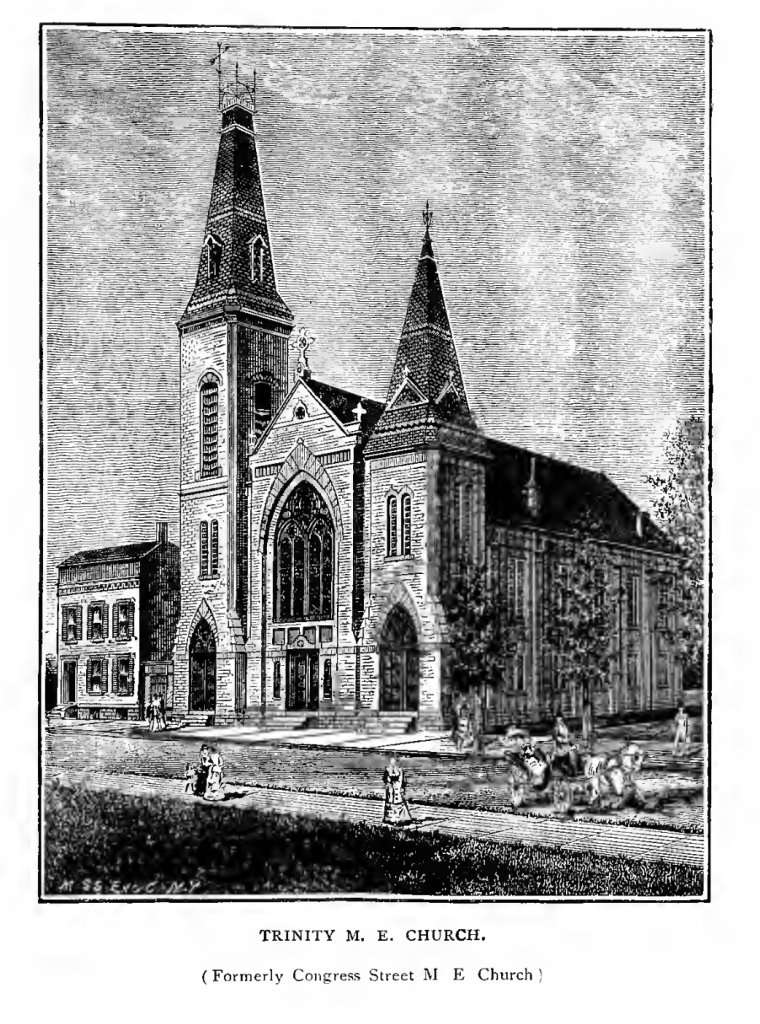
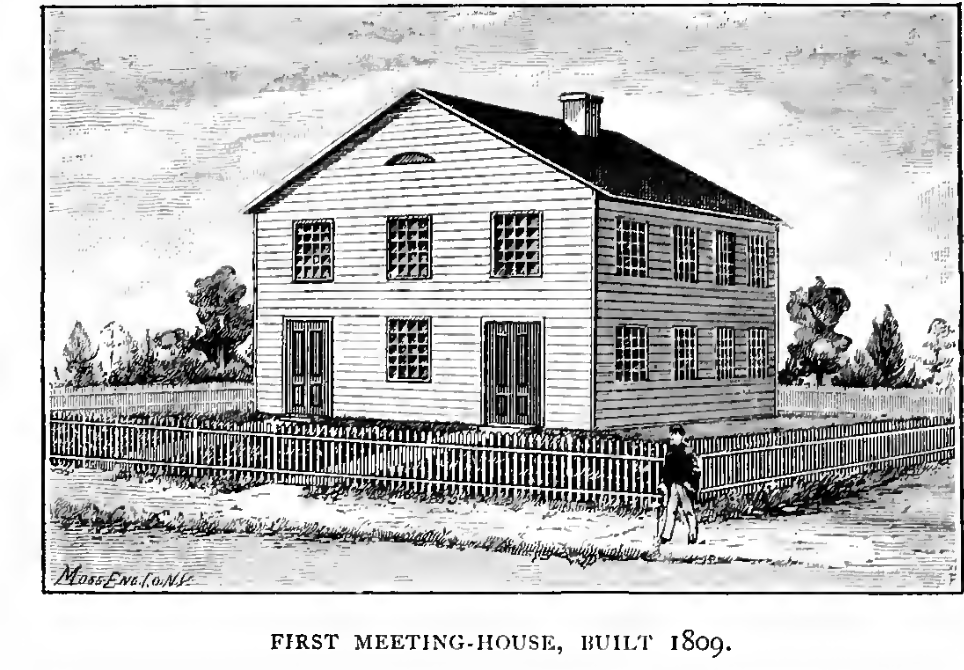
“The circumstances attending the organization of Trinity Church are briefly detailed in the first records of the society. ‘ The Methodist Episcopal Church in Congress Street, Troy, N. Y., was organized in the month of October, 1846’ (…) In June (1847), an old blacksmith- shop, a wooden building, on the south side of Congress Street, at its intersection with Ferry Street, was reconstructed for a house of worship, which was thereafter familiarly called the “Hemlock Church,” Hillman adds, “The organization of the Congress Street Church may be traced to a prayer-meeting first held about the year 1832 (…) at the house of Isaac Hillman, standing a short distance east of the site of the Hemlock Church on Congress Street.(…)The small building proving inadequate for the uses of the congregation, the society determined to build a larger edifice of brick, and purchased the site of the present church, on the north side of Thirteenth Street, near its intersection with Congress Street.” The building was dedicated in 1849. (Hillman, pp 102-111)
With the Hillman family so invested in this particular congregation, it is not surprising that the main historical source book for these essays (Methodism in Troy by Joseph Hillman, 1888) has a lot to say about it. Indeed, Hillman and his sister donated a lot of money to complete its construction. Despite the family’s involvement, finding the site of the Hemlock/ Congress Street building as well as the Hillman home, has proved tricky.
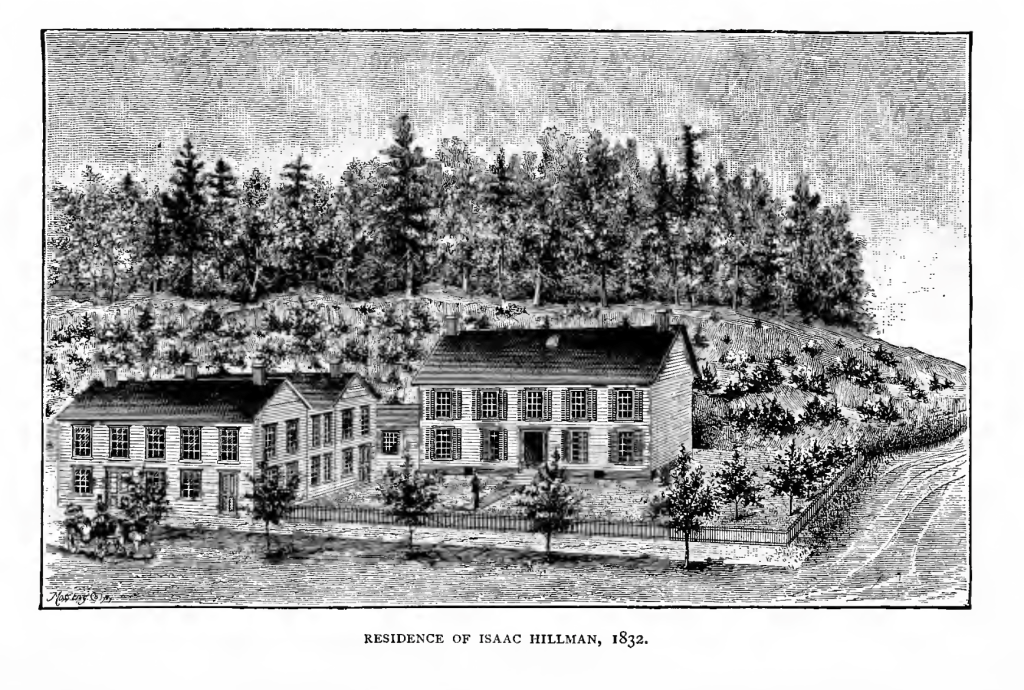
The full account of the congregation’s beginnings, once again, hints at some disagreements or jealousies that may have been behind the organization of the new society on Congress Street. The prayer meetings, held at the Hillman residence, twice described as bring a short distance east of the site of the Hemlock Church, were held 3 times a week. Hillman reports with a modest pride: “It was afterwards asserted that more souls had been converted at those prayer-meetings than in the State Street Church, while they were held.” (Hillman, p.105) The meetings were sometimes quite long, and began to interfere with the worship times of the State Street Church, at which point there were several attempts to have them stop earlier, all unsuccessful. Hillman adds: “In fact those prayer-meetings were great feeders to the church.” (Hillman, p.107) Perhaps those attempts to control the prayer-meetings is what made this congregation determined to be separate from the State Street church, which finally happened in 1850, taking a core of members of the North Second Street and State Street congregations to the new church. In another hint of disagreements past, when describing the new building, Hillman adds: “The pews in the church were free, and since its erection no rentals for sittings have been imposed or collected.”(Hillman, p.110.) However, Hillman is not so shy about writing about the major theological disagreement, which necessitated the split: a sermon preached in 1847, by the Rev. John Clark, broke from a key Wesleyan tenet, and despite the conference demanding he never preach that way again, the idea took hold among some State Street members. It proved intolerable to some of the stalwarts of the church.
Even this new congregation had an almost immediate split, because in deciding to build a new sanctuary on Thirteenth Street, a faction decided to remain at the Congress Street site and replace the wooden building with a brick one. It was first named the True Wesleyan Methodist Church but the one image this writer located, in the 75th anniversary booklet of Trinity Church, show a brick “Congress Street M.E. Church” in 1866, with the Sunday School class gathered outside – 17 years after Trinity M.E. Church was first opened. By claiming it in the booklet, I can only presume this congregation did return to the Trinity fold not too long after the photograph was taken, unless the original church on 13th Street was very different before it was adapted…still working on that!
Not surprisingly Methodism in Troy includes a number of stories about Hillman family members – stories which deserve their own essay, but which include a treacherous sea journey, in which ship and people were deemed safe only through the prayers of the Troy meeting, to Hillman’s sister giving up her spot on a lifeboat on a burning ship in the Hudson, to save a young servant. The servant survived, Hillman’s sister did not.
The congregation merged with that of State Street-Fifth Ave in 1965, creating Christ Church Methodist Church. A year later, with the denomination’s merger with the United Brethren denomination, the official name became Christ Church, United Methodist, and so it continues to this day.
Arriving in the congregation in the early nineties, the author was told that this merger was seen as one of the most successful of its kind. Nonetheless, members of Trinity Church remained very proud of their association with that society, often referring to themselves as “Trinity members” long after the church had closed. The church was regarded as a good, local, family church with multi-generational friendships between attendees and their families. Its membership was just as dedicated and hard-working, as it had been in 1832, so it is hardly surprising, that although the State Street congregation kept its building, and possibly more important to them its historical site, the leadership quickly incorporated many of the Trinity faithful into influential positions. Even in the 1990’s, many former Trinity members continued in leadership roles.
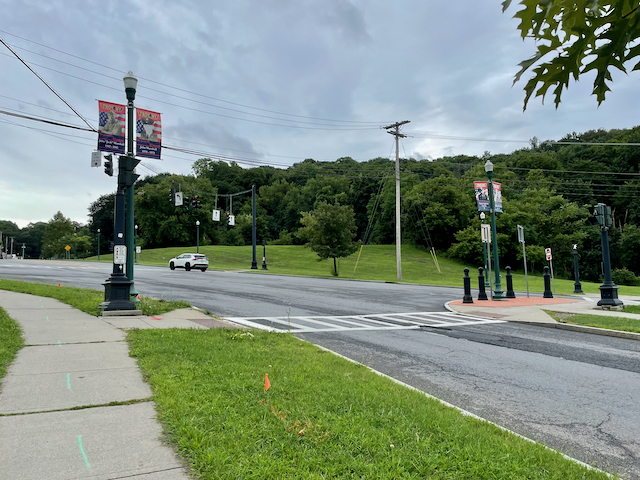
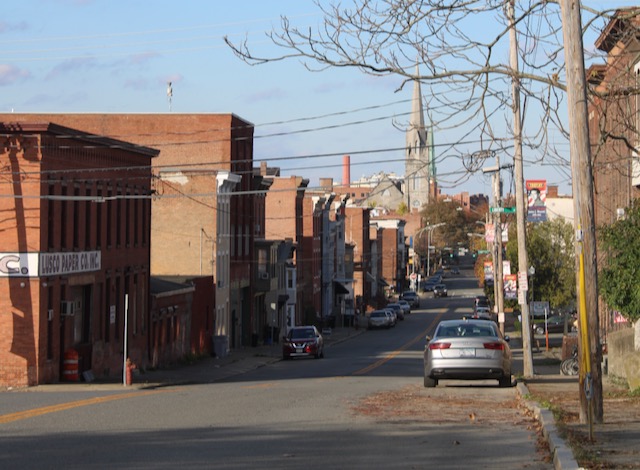
The current junction of Ferry and Congress Streets. Troy NY, with the location of the original junction on the extreme left of the image. The green brick house mentioned, is obscured by trees close and behind the orange road sign, far left.
Finding the exact locations of the 2 earlier buildings, as well as the Hillman home, has proved difficult. The road layout is similar but not exactly the same. Ferry and Congress Streets still merge as they climb the hill going east from the city, but they merge just below Eighth Street now, more than a hundred yards west of the location of Hillman’s day. Numbering has probably been changed, too, as Ferry Street did have its numbers changed – attested by the historical marker for Samuel (“Uncle Sam”) Wilson’s home which is now put as 76 and not the 144 of Sam’s day. In fact reports of the Congress Street M.E. Church being at 22 Congress Street, and Hillman’s home at 188 Congress Street, make them seem not so very close after all: unless one of those refers to the new numbering. The lot numbers on early maps are different again. Some other road layouts in the area have also been changed a little, and, of course, almost all the buildings have been replaced in the area of most interest. Earliest records show Congress Street as a mass of small workshops and stores, many occupied by members of the State Street Church. That the small blacksmith shop was a first location is intriguing, as one of the earliest converts was himself a young blacksmith apprentice on that street: Noah Levings went on to become a well known preacher, teacher and financial secretary of the American Bible Society. It would have been a nice link to the earliest history of Troy Methodists to use that site, but we may not be able to know at this point, if it was the same one – Troy had many small foundries and blacksmiths.
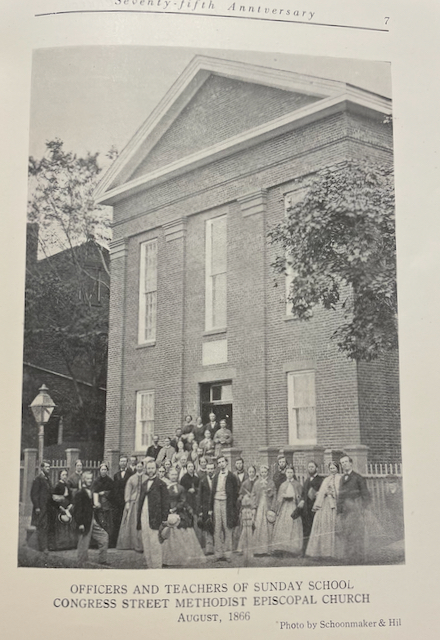
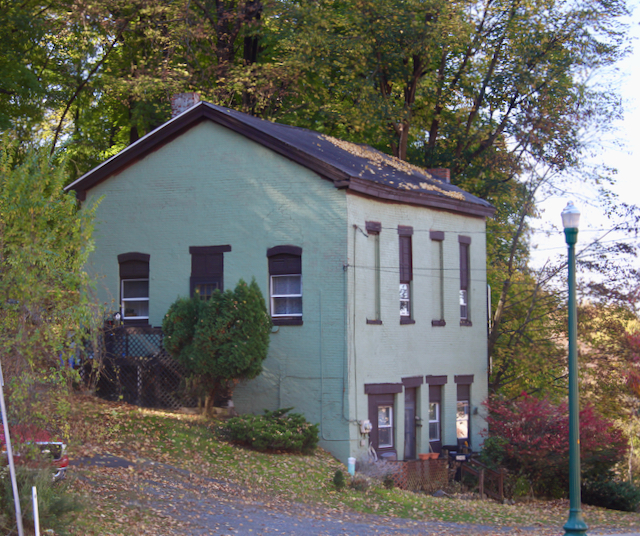
I am going to continue to research this question and will add an update when there are answers – the address of Samuel (“Uncle Sam”) Wilson’s farm, may help, as there has been more research into his history, but he was certainly a near neighbor to the Hillmans at some point. The last reference to the Congress Street, smaller brick church (above), was as it being the location of the Burns & Ryan Undertakers’ business, which may prove useful. It has been suggested it is the one older brick building under the hill at the approximate spot – a green residence with a shape reminiscent of a chapel – but the structure and orientation is not so convincing, when compared with the photo (unless, as commented above, that brick building is the earlier version of the 13th Street church, and the renovations very much more substantial than recorded!) The actual building may have been, like Uncle Sam’s home, pulled down for a road development that never happened, or part of the wider urban renewal project, which almost deprived Troy of so much amazing architecture, but still managed to destroy a lot. Without a mention for over a hundred years, various fates could have befallen the old church.
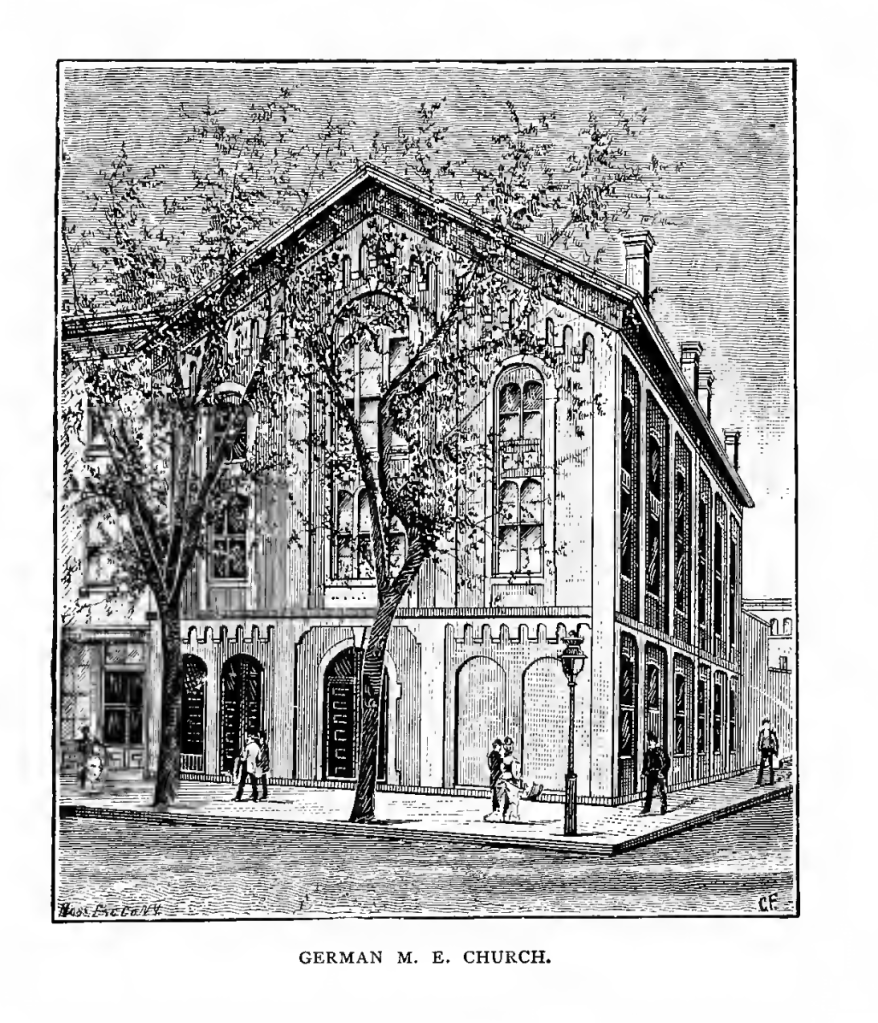
The building pictured at the top of the article shows the church after it was enlarged in 1880. The cornerstone was first laid on 13th Street, just north of its junction with Congress Street, in October 1848. The church was dedicated in 1849, and the following year, the society became an independent congregation with its own minister. It was enlarged, by 200 seats, in 1860, with enlargement to the Sunday School rooms in 1862. Hillman writes: “In 1880, the church was renovated and enlarged and attractively improved in appearance by the addition of corner towers and other architectural features, at a cost of $14,084.94. The building was rededicated December 28, 1880.” (Hillman. pp 110-111.
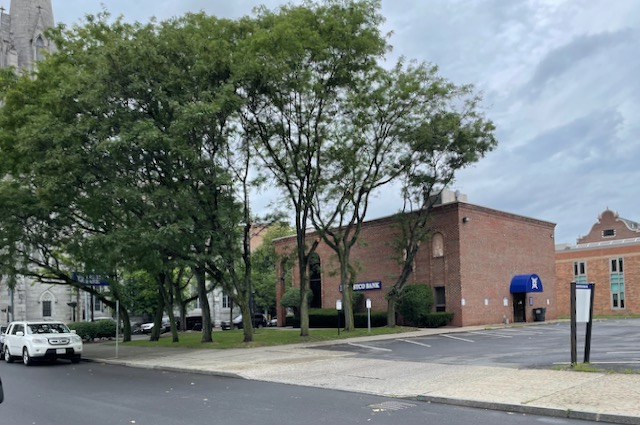
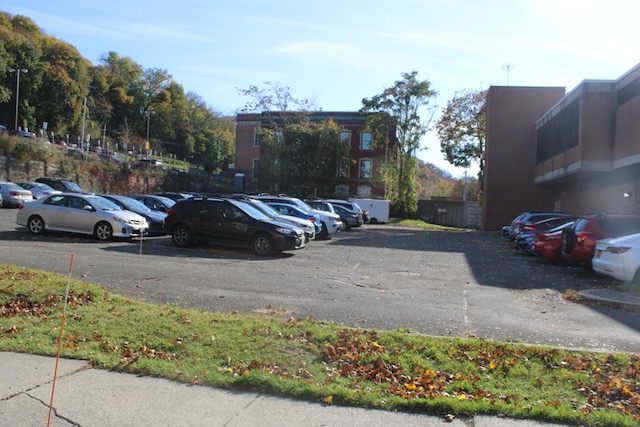
The structure burned, a decade after the congregation moved out, and was razed. A parking lot partially covers the site, today.
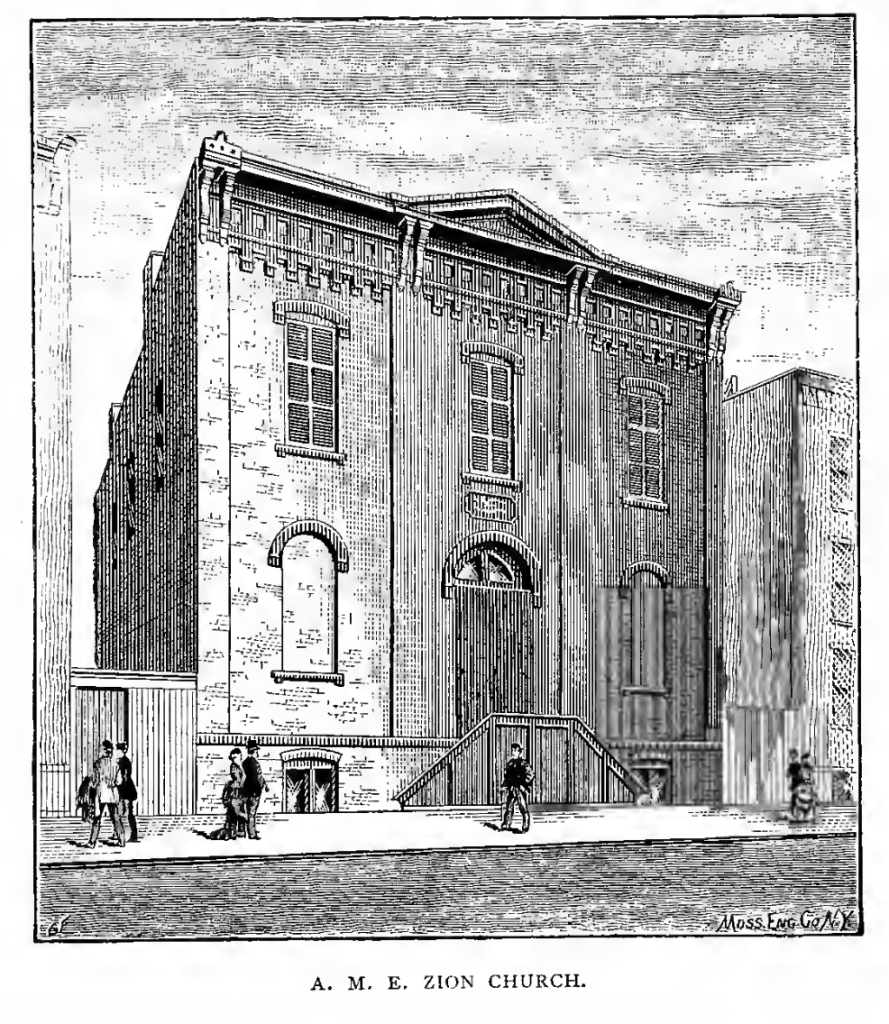
The etchings are from Hillman’s book, Methodism in Troy, 1888, which is available to read free online at various archives, including the Library of Congress. The photograph of the Congress Street Sunday School is from the booklet produced for the 75th Anniversary of Trinity Church, which is owned by Christ Church, United Methodist. A copy can be viewed at Troy Central Library. The photographs are the author’s.
 janetintroy